
The economic model intended for recovery, recycling and regeneration
The recent health emergency due to Covid-19 has brought with it countless consequences, mostly negative. However, there are also those who have not let themselves be discouraged and have made the most of the time available, seizing new opportunities generated by a dark moment; opportunities for humanity and the entire planet.
What is meant by circular economy? The circular economy is an economic system of production and consumption based on the reuse, recovery and recycling of products and materials, in order to promote greater accessibility and affordability. It offers numerous advantages mainly linked to the reduction of environmental impact:

- It reduces environmental pressure, decreasing the percentage of CO2 emissions caused by the production and disposal of materials
- Promotes the use of renewable resources; this occurs thanks to the recycling and reuse of old products, thus also avoiding the significant amount of waste
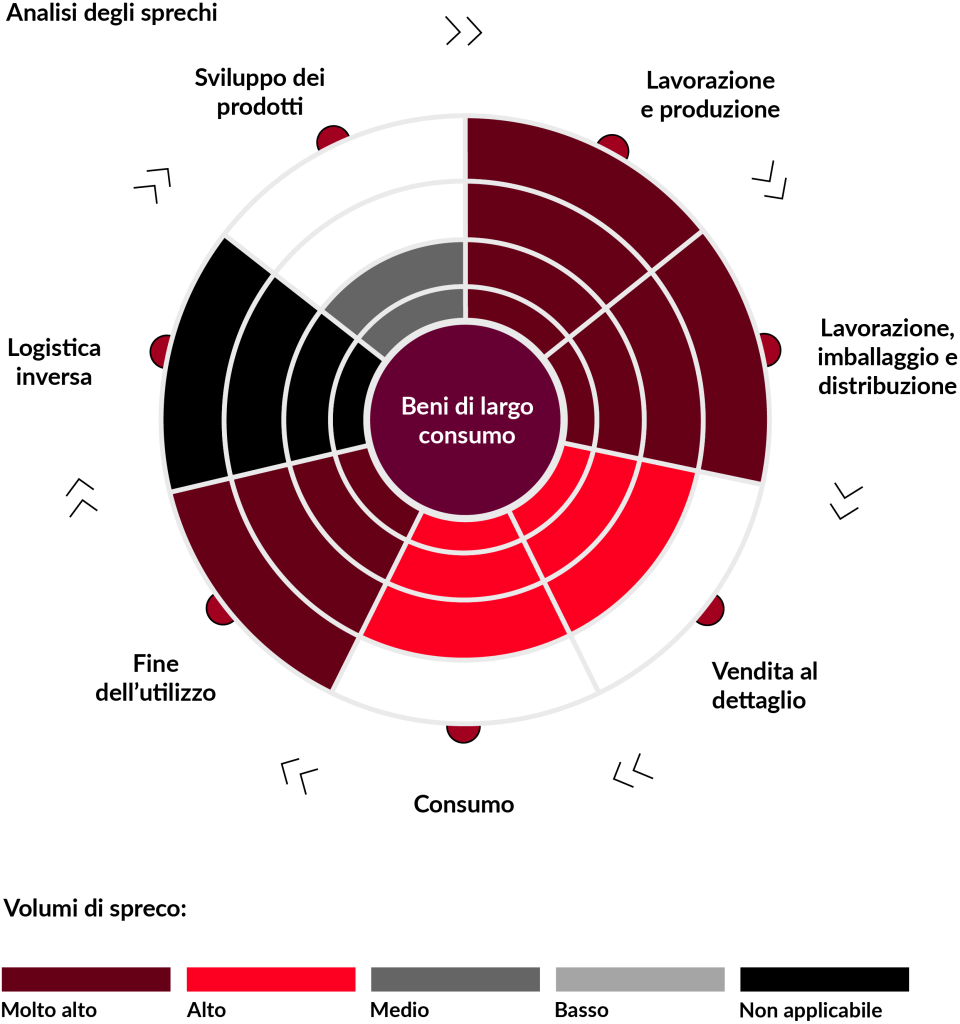
- It increases the life cycle of products, promoting significant savings for consumers. A practical example is provided by the consumer goods sector. The dispersion of waste along the value chain represents, in fact, a significant problem that deserves careful analysis in order to find innovative and more sustainable solutions in the production and disposal processes. It is essential to continue to raise awareness, re-educate and empower consumers and public administration, re-establishing effective and efficient processes, creating new habits for common well-being.
The circular economy is among the production models that have inspired new ideas and numerous strategic choices, taking on an important role in companies that operate pursuing the value of sustainability. Over the last 10 years, there has been an increase in the sectors in which this model has been applied. According to the data published in the Circular Economy Report 2021 presented by Energy&Strategy Group - School of Management Politecnico di Milano, thanks to the adoption of circular practices, a positive influence is exerted which involves not only the environment, but also the industries, for which the annual generation of 100 billion euros is expected by 2030, i.e. almost 4.5% of the GDP in 2019. Not all companies have joined this initiative, in fact, 34% of them intend to exclude the possibility, even in the future, of embracing the transition towards these practices; however, fortunately as many as 44% of companies are in favor and already at an early stage.
The sectors most involved are six and concern:
Circular Economy Report 2021, l’economia circolare conviene – Rinnovabili.it
Among the most sustainable approaches we remember IKEA, one of the most productive and ecologically sustainable companies in the world, awarded at the Circular Economy Awards for its circular economy model aimed at reducing environmental impact and promoting a healthier and more sustainable life at home.
«We firmly believe that the path towards a circular economy requires a bold and innovative mentality, capable of involving all stakeholders.» said Peter van der Poel, Managing Director of IKEA of Sweden AB.
We also remember the best-known example of sharing platforms, Airbnb, which has swept everyone away with its "sharing economy" model, a driving force for the circular economy.
“Several studies show that Uber and Lyft have driven people away from buses, subways and walking, and that the apps add vehicles to the overall amount of drivers on the road in the United States,” wrote the Wall Street Journal's Eliot Brown.
The circular economy improves brand reputation. We have also been talking about "circular fashion" for years now, and Made in Italy has many stories to tell: from innovative fabrics and materials to sartorial art. Renewable raw materials or from the recovery and recycling of fabrics; but also fashion as a service, thanks to the rental of clothes and accessories. Thus, among the 100 excellent stories collected by the Symbola Foundation and Enel, 13 concern the world of fashion.
The Ferragamo fashion house has conquered international markets and dressed celebrities such as Princess Diana, Marylin Monroe and Audrey Hepburn. In 2021, the company gave life to a series of experiments, projects and products that combine fashion and eco-sustainability, starting from the choice to focus on recycled materials or production waste. Thus was born the Earth Top Handle bag, a reinterpretation of the iconic Top Handle bag model, presented on the occasion of Earth Day 2021. The bag is made of FSC-certified cork, the lining is in linen with recycled polyester elements.
The 100 Italian Circular Economy Stories (second edition) narrate a Made in Italy that looks at quality and innovation in a circular key: from agri-food to fashion, from packaging to mechanics, from wood furniture to construction and finance, from electronics to chemistry. It is not an exhaustive selection, but these are some of the most innovative and solid realities.
In fact, the 100 stories collected are a selection of the 241 virtuous companies mapped, where many other fashion and textile companies are mentioned.
Even within the International Cooperation Campus of Free Mind Foundry it is possible to find companies that operate in the circular economy sector and that share the values of this approach: Orange Lab and Futurea, which has the mission of helping sustainable companies towards the transition into the circular economy with a focus on investments with high technological value; KYMIA, an innovative startup and a brand that shows itself with the symbol of the circular economy, which respects and improves the health of the skin, thanks to the action of nature; and again BaxEnergy, a multinational company that develops software solutions for monitoring renewable energy and critical infrastructures of different nature and technology; WiSNAM – Sensing Everything Everywhere, a company that develops IoT devices for collecting data from renewable plants and advanced solutions for environmental sensing.
Today's context is proving to be increasingly favorable to accepting renewal. Consumers are starting to show interest in the ethical and ecological aspects of the production of goods, products and services, opting for increasingly green solutions.
Only by cooperating and investing in this great project which is our future can we achieve long-lasting results for us and for generations to come.